Home › Pool Cage Rescreening
Refresh your outdoor area with complete pool cage rescreening in Lakeland, FL. We remove old, faded, or torn screens and install new, high strength mesh throughout your enclosure. Enjoy clearer views, improved bug protection, and added value with a fully rescreened pool cage.
Lakeland Screening provides professional pool cage rescreen throughout Lakeland, FL, Florida and the surrounding area. Our licensed, insured crew delivers safe, clean, on-time work with a free estimate before anything begins. Call 863-591-8082 or request your free quote.
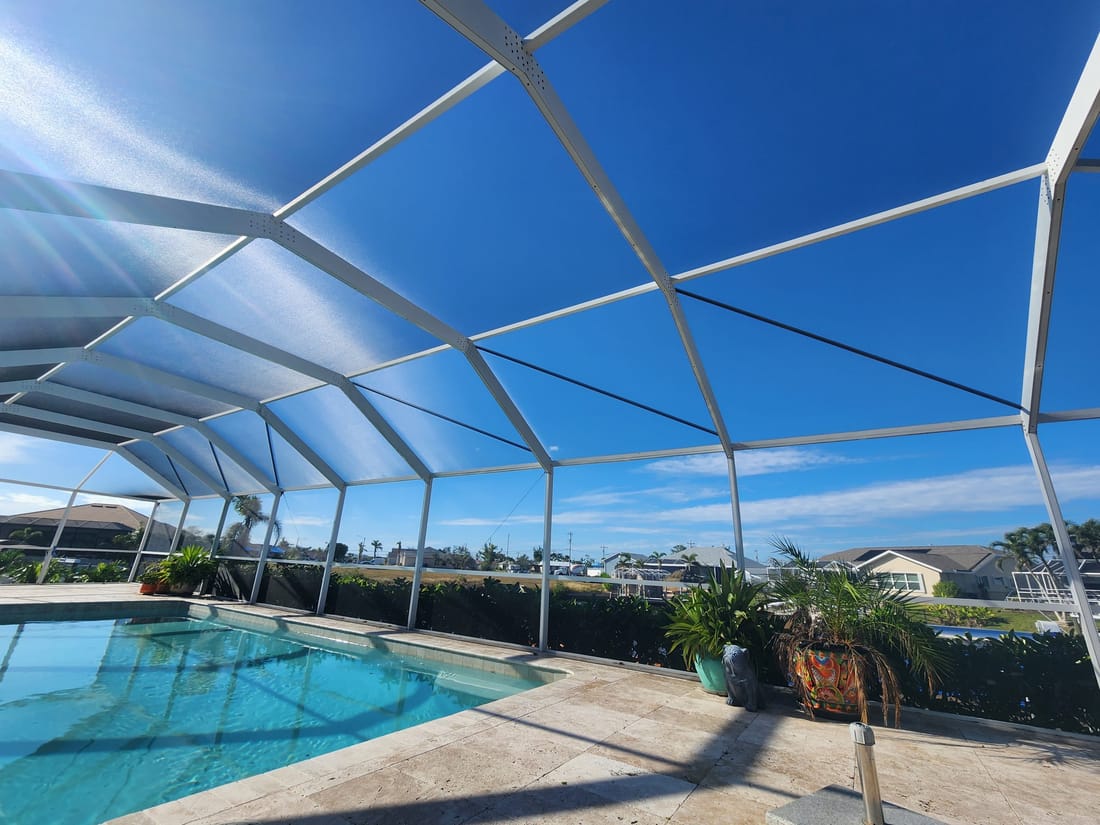
Pool cage rescreening for Lakeland pools that actually get used
In Lakeland, pool cages take a beating from sun, rain, and storms. If you see tears, sagging panels, algae staining, or bugs sneaking in, a full pool cage rescreen can be smarter than patching panel after panel. Lakeland Screening focuses on rescreening cages that are already built, so we work with the frame you have and make it perform like new.
When we come out, we start by walking your entire enclosure with you. We look for ripped panels, loose spline (the rubber that holds the screen in), corroded fasteners, bowed support members, and any frame movement from past storms. We also check door closers, locks, and kick plates. Then we talk through whether you need a full rescreen or a strategic partial rescreen, so you only pay for what actually makes sense for your cage and how you use your pool.
Because Lakeland has strong afternoon sun and frequent summer storms, material choice matters. We explain the pros and cons of standard fiberglass screen, upgraded polyester screen, and specialty screens that block more sun or are tougher against pets. You will know what you are getting, what it should realistically last in our climate, and what it will cost before any work starts.
How the pool cage rescreen process works, step by step
A proper pool cage rescreen is more than just pulling a few panels and stretching new mesh. At Lakeland Screening we follow a detailed process so the new screen stays tight and looks clean for years.
First, we remove the old screen panels in a planned order so the structure is never stressed more than it needs to be. Long roof panels come off in sections, then wall panels, then doors, so wind cannot suddenly push a half-open cage around. While the screen is off, we scrape out old spline from the grooves, remove rusted screws where we can reach them, and vacuum debris out of the tracks.
Next, we inspect and address minor frame issues. If a brace is loose, a door frame is racked, or a cross member has shifted, we re-secure it before any new fabric goes up. Light surface corrosion on aluminum can be cleaned, and we can swap out rusted fasteners with stainless steel or coated screws in the areas we are working. This is also when we discuss any optional upgrades, like changing door hardware or adding pet doors.
Then we start installing new screen panels. We roll the new screen over a section of the frame, square it so the weave lines up with the frame for a neat look, and press new spline into the channels with a roller. For large roof sections we often use helper braces and work in cooler morning hours so the Florida sun does not expand the screen too quickly and cause wrinkles later. We tension the screen evenly in all directions, trim the excess, and check from multiple angles to be sure it is flat and tight.
Once all panels are in place, we test the doors for smooth closing and latching, check every corner for gaps where insects or frogs might squeeze in, and walk the perimeter to ensure the new screen tucks cleanly to the deck or gutter line. Before we leave, we rinse down work areas so there is no loose spline, screws, or screen scraps left around your pool.
Screen material and design choices for Lakeland backyards
Not every pool cage rescreen uses the same mesh. Lakeland Screening carries several screen types that handle our heat, storms, and bugs differently, and we help you decide what fits your yard and budget.
Standard 18/14 fiberglass screen is the basic option most older enclosures have. It keeps out most insects and is cost effective, but UV and wind can wear it down in 7 to 10 years in Florida. For homeowners who are tired of redoing the cage that often, we often recommend a heavier 20x20 or polyester screen for at least the roof sections. These upgraded meshes handle hail, falling oak twigs, and pressure from kids leaning on the walls better than basic fiberglass.
If your pool is close to a canal, conservation area, or one of Lakeland’s lakes, no-see-ums and tiny midges can be a problem. Tighter weave "no-see-um" screen blocks smaller insects, though it slightly reduces airflow. Around heavily wooded yards, this tradeoff can be worth it for comfort on humid evenings. We can also mix materials, for example, no-see-um mesh on the lower wall panels where bugs bother you most, and standard screen higher up to keep airflow and cost in balance.
For privacy, there are screens that slightly darken the view into your pool without making it feel walled in. These can be used selectively along a property line facing a neighbor’s patio or a busy street. If you have pets that push or jump on the panels near the ground, we can add pet-resistant screen on the lower sections or install aluminum kick panels so claws and noses hit solid material instead of mesh.
During the planning visit we map your pool area to sun angles, nearby trees, and wind exposure. The west side that takes Lakeland’s late day sun might benefit from a different mesh choice than a shaded side under large oaks. This kind of targeted planning is how we avoid a one-size-fits-all cage and give you a screen setup that fits how you actually use the pool.
What affects the cost of a pool cage rescreen in Lakeland
Homeowners often ask why prices for a pool cage rescreen can vary so much. Lakeland Screening breaks it down so you know what you are paying for and where you can choose to invest more or save.
The main driver is the total square footage of screen surface. A tall two-story cage around a large pool and patio can have more than double the screen area of a small one-story lanai, even if the footprint on the ground looks similar. Roof panels also cost more than side walls because they are harder to reach and require more setup time and safety gear.
Material choice is the next major factor. Standard fiberglass is the most affordable, but if you upgrade to no-see-um or long-life polyester you pay more up front and usually save over time because you rescreen less often. We can quote options side by side. For example, we might show you standard mesh on the entire cage, then a hybrid option with durable screen on just the roof and wind-facing side.
Condition of the frame and hardware matters too. If the aluminum is solid and only the screen is worn, the job stays straightforward. If storms have twisted some members, anchors have pulled from the deck, or the gutter tie-ins are loose, we will recommend those repairs before or during rescreening so your new screen does not fail early. Replacing rusted screws with stainless in accessible areas adds a small labor and material cost now, but it can keep your cage tighter through future storms.
Access and layout also affect pricing. Cages built very close to fences, steep yards, or enclosures over raised decks can require special ladders and staging. Unusual roof designs or multiple attached screen rooms take more layout time and custom fitting of screen panels. During your estimate we point these issues out clearly so there are no surprises when the work starts.
Finally, scheduling can play a role. Spring and fall are prime rescreen times in Lakeland, since the weather is mild and many homeowners are getting ready for heavy pool use. Booking ahead for those seasons helps you avoid delays. In the heart of summer we often shift more ladder and roof work to early mornings to stay safe and keep the quality of the screen tension consistent despite the heat.
When to rescreen and what to expect from Lakeland Screening
You do not have to wait until the screen is ripping out in sheets to plan a pool cage rescreen. In our area the strong sun, thunderstorms, and pollen slowly weaken the mesh. Signs that it is time to call Lakeland Screening include gray or chalky screen that leaves dust on your hand, multiple small tears that keep growing, panels that sag or hum in the wind, and increased bugs or debris getting into your pool.
In Lakeland, good times to schedule rescreening are late winter through spring and again in early fall. You avoid the heaviest summer storm pattern and work is more comfortable, which helps with precise roof work. If you have had storm damage, let us know, and we can work with your documentation or insurance adjuster when appropriate. For homes near lakes where algae and pollen are heavy in certain months, spring rescreening can give you a fresh start before the long swim season.
When you hire Lakeland Screening, we set clear expectations before the job. We explain how long the cage will be open while old screen is off, how we protect your pool from debris, and whether you should move furniture or plants. In most residential cases, a full rescreen is completed in one to two days, depending on cage size and weather. You can usually use the pool the next day once we have cleared and rinsed the area.
After the rescreen, we show you how to spot early signs of wear so you get the longest life from your new mesh. Light rinsing of the screen and frame a few times a year, trimming plants away from the enclosure, and avoiding leaning heavy items on the panels all help. If you ever see a seam loosening or a spline working its way out, calling us early usually means a simple fix rather than a bigger repair.
Our goal is straightforward. We want your pool cage to feel like a clean, bug-free outdoor room again, so your family can enjoy Lakeland’s warm weather without worrying about screen problems every season.